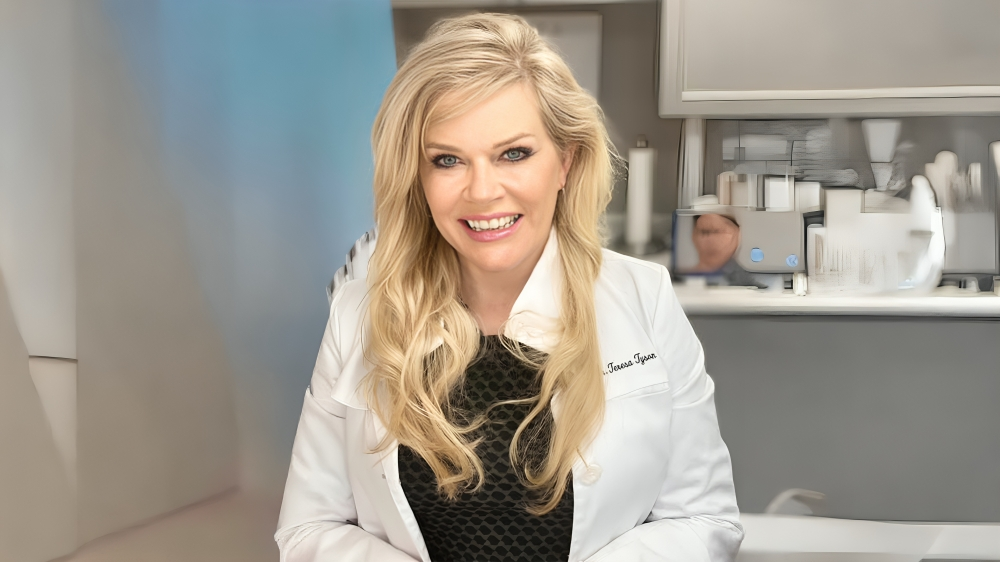
For more than three decades, Dr. Teresa Owens Tyson has worked at the front lines of rural healthcare in Appalachia, confronting a reality many policymakers and healthcare executives don’t often get to see firsthand. In communities where specialists are hours away and insurance often fails to cover even basic care, healthcare access becomes a defining factor in the quality of life.
As President and CEO of The Health Wagon, the nation’s oldest mobile health clinic, Dr. Tyson has spent her career bridging rural healthcare gaps in America through mobile clinics, telehealth expansion, charitable pharmacy access, and integrated care delivery. What began as a local mission in Southwest Virginia has evolved into a nationally recognized model for healthcare innovation serving underserved communities. “Health equity means recognizing that healthcare access is not just about having a clinic building,” Dr. Tyson says. “It’s about removing the barriers that stand between patients and the care that they need.”
Redefining Rural Healthcare Delivery
Dr. Tyson’s approach to care delivery transformation grew from her personal experience. Raised in a coal miner’s family in Appalachia, she witnessed poverty and health disparities long before entering medicine. Those experiences shaped her belief that building sustainable rural health systems requires more than traditional healthcare infrastructure.
Under her leadership, The Health Wagon has expanded into a multistate network of stationary and mobile clinics providing medical, dental, behavioral health, pharmacy, and specialty care services. The organization delivered more than 28,000 patient visits in free healthcare services in 2024 alone.
At the center of this work is the Integrated Comprehensive Care Collective, or ICCC, a healthcare innovation framework designed specifically for vulnerable populations in isolated regions. The model combines mobile outreach, telehealth, specialty services, pharmacy access, and social support into a coordinated system.
“We are not just hoping that the patients can get to us,” Dr. Tyson shares. “We’re going out in the periphery and finding the patients.” The Health Wagon became an integral partner in the first Federal Aviation Administration (FAA)-approved drone delivery of medications in the United States and pioneered telecolposcopy services with the University of Virginia to bring advanced diagnostics into remote communities. The organization was also among the first in the nation to integrate SpaceX Starlink connectivity into mobile healthcare units, expanding digital access in areas where broadband infrastructure remains unreliable.
Health Equity Through Innovative Delivery Models
Dr. Tyson’s work is showing that healthcare leadership in marginalized communities requires providers to address social determinants of health with the same urgency as clinical treatment. The Health Wagon maintains an annex stocked with mattresses, clothing, toiletries, food boxes, and emergency supplies for patients facing housing insecurity or economic hardship. Dr. Tyson believes these interventions are essential to improving long-term outcomes. “If you’ve got a diabetic and they don’t know where their next meal is coming from, you’ve got to address the food situation first,” she says. “They’re not listening to you, and meaningful engagement becomes difficult,” she says. “We are not only assessing the situation; we’re offering a solution.”
That solution often involves adapting care plans to financial realities, connecting patients to charitable pharmacy programs, or finding lower-cost alternatives that still preserve continuity of care. The broader mission is transforming health disparities through clinical excellence while ensuring care remains accessible to the working poor, elderly residents, and uninsured patients who often fall outside traditional healthcare models.
How Mobile Clinics Transform Patient Outcomes
The clearest illustration of the healthcare system’s gaps may be the Move Mountains Medical Mission, formerly Remote Area Medical Wise County, which Dr. Tyson helped to launch. The annual outreach event delivers free medical, dental, and vision care to thousands of patients. By its twentieth year, more than 100,000 people had sought treatment through the initiative. “We’ve seen people come and line up like a week in advance for healthcare,” she says.
The conditions treated often reflect years of delayed care: untreated hypertension, uncontrolled diabetes, skin cancers, severe dental infections, and untreated mental health conditions. During an outreach clinic, a seven-year-old child preparing for a tooth extraction told the volunteer dentist, “If I start to cry, whatever you do, pull that tooth.”
The story reflects the urgency behind Dr. Tyson’s CEO strategy for serving underserved populations. For her, rural healthcare access is about integrating comprehensive care for vulnerable populations, while removing transportation, financial, and technological barriers that prevent treatment from happening in the first place.
From Appalachia to Global Health Advocacy
Dr. Tyson’s work has taken her from rural Virginia to the global stage, including speaking engagements at the United Nations and the World Health Organization. “We need to stop treating rural healthcare as an afterthought,” Dr. Tyson says. She advocates for stronger reimbursement models for telehealth, mobile care, behavioral health, and nurse practitioner-led systems. She also says that rural providers should receive funding to train in advanced procedures traditionally limited to specialists.
As artificial intelligence and digital tools become increasingly integrated into medicine, Dr. Tyson sees enormous potential for healthcare innovation, particularly in remote communities. But she warns that technology alone cannot solve health disparities. “The goal is not to just make healthcare more high tech,” she says. “The goal is to make it more reachable, more personable, and make sure that it’s just and right for that particular patient.” From Appalachia to the global stage, Dr. Tyson’s work demonstrates how innovative delivery models can expand healthcare access for underserved populations.
Follow Dr. Teresa Owens Tyson on LinkedIn or visit her website for more insights.