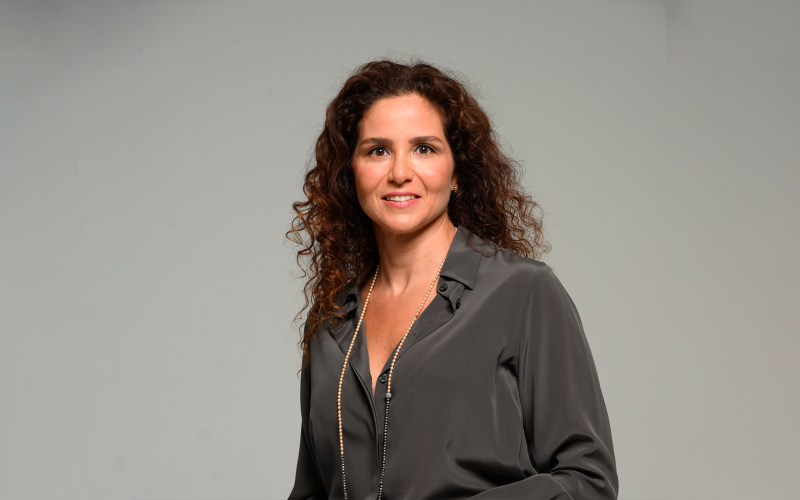



Caribbean resort development has a persistent failure mode: a developer buys beautiful land, builds something photogenic, and discovers after opening that the property works as an image and not as a business. Guests feel the friction even when they cannot name it. Kristyl Nelson, COO of Kindah Enterprises, the parent company of Kindah Capital Group has been operating businesses in Negril, Jamaica since 2006, which puts her on the other side of that equation from most people writing master plans. Her argument for High Life Resort & Spa is that a destination only feels effortless to a guest when the operation underneath it has been designed in parallel with the architecture, not bolted on afterwards. That is a harder proposition than it sounds, and it is the reason the project is being planned as one connected destination rather than a cluster of adjacent assets.
Why One Site Changes The Math
The numbers behind High Life explain the ambition. The broader master plan covers roughly 65 acres with approximately 1,800 feet of beachfront access, bringing hospitality, residences, and resort amenities together inside a single destination. Nelson is direct about what makes that significant. A land position of this scale with meaningful oceanfront access is increasingly difficult to replicate in Negril, and scarcity of that kind does not reverse itself.
What interests her is the combination rather than any single factor. “What makes the opportunity particularly compelling to me is the combination of characteristics that are difficult to recreate: significant oceanfront land, an established international tourism destination, connectivity through one of the Caribbean’s important tourism gateways, and the ability to create multiple complementary hospitality experiences within one master plan,” Nelson says. Each of those exists independently across the Caribbean. Stacking them on one site is what shifts a resort project into destination territory, and it is also what allows a developer to serve more than one kind of traveler without building in more than one place. Jamaica’s international connectivity gives Negril access to travelers from major global feeder markets, which is a central part of how Nelson has thought about the long-term opportunity.
Two Concepts, One Destination
Luxury travelers do not want the same thing, and pretending otherwise is how resorts end up satisfying nobody completely. Some want privacy, exclusivity, and a villa above the ocean. Others want restaurants, wellness, entertainment, and the social energy of a full-service property. High Life’s current master plan answers both through two distinct hospitality concepts, an ultra-luxury villa and branded-residence experience alongside a larger luxury lifestyle resort, totaling 330 hotel and residential keys.
The risk in that approach is obvious. Multiple components can easily read as multiple projects sharing a postcode. Nelson’s position is that the components are not the point. “The important part isn’t simply having multiple components. It’s making them feel connected,” she says. “A guest should be able to experience different parts of High Life without feeling as though they’ve left the destination.” That requirement is what turns the master plan from a zoning exercise into the governing discipline of the project. It dictates how guests move between concepts, how each one keeps its own identity, and where the boundaries between them should be invisible. Get it wrong and the destination fragments. Get it right and the scale becomes an asset rather than a dilution.
The Parts Guests Never Photograph
Nelson’s operating background shows up most clearly in what she pays attention to. Arrival sequences. How employees move through a property. Service access. Back-of-house functions. “Those things may never appear in the vacation photos, but they influence almost everything the guest experiences,” she says. Developers who have never run a dining room or managed a shift at scale tend to treat these as technical afterthoughts, which is precisely why so many beautiful properties operate badly.
High Life’s plan is built so the two hospitality concepts can share selected infrastructure, service access and back-of-house functions while keeping their individual identities intact. That is a deliberately unglamorous design decision with two separate payoffs. “The guest should experience simplicity, even when what we’ve built behind that experience is incredibly sophisticated. That’s what seamless luxury means to me as an operator,” Nelson says. The second payoff is financial. “As a developer, I’ve learned that many of the decisions that make an experience feel effortless for the guest can also make the underlying asset more thoughtful, efficient, and valuable.” Shared infrastructure reduces duplication, duplication is cost, and cost compounds across a 330-key destination over decades. The guest experience and the asset economics are improved by the same choice, which is rarer than the industry admits.
That logic extends to the setting. High Life’s West End location sits apart from Negril’s traditional resort corridor, with an elevated oceanfront position and significant beachfront across the broader property. Nelson is clear that the destination does not need embellishing. “I’ve been in Negril long enough to understand that you don’t need to manufacture what makes this place special. It’s already here,” she says. “Our job is to create something worthy of its surroundings.” After nearly two decades of operating in the market, her conclusion is that the strongest hospitality developments do not simply place a resort in a destination, they create something that belongs there. Guests will never experience High Life as a master plan, development phases, or investment structures. They will experience how it makes them feel, and everything behind that feeling has to disappear for it to work.
Follow Kristyl Nelson on LinkedIn for more insights on hospitality development, resort operations, and destination master planning in the Caribbean.