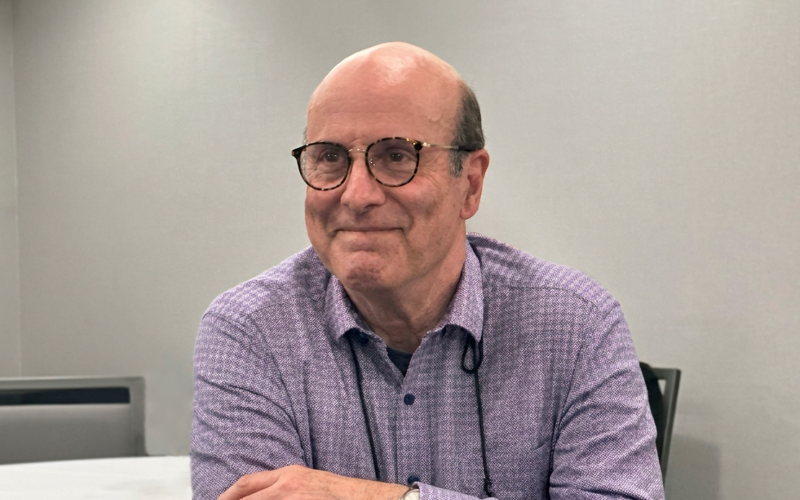



Most organizational change programs fail quietly, not loudly. The announcement goes out, the slides circulate, the new structure appears on a chart, and then nothing moves. Decisions stall. Escalations pile up on the chief executive’s desk. Six months later, leadership wonders why the savings never materialized and why the customers who were supposed to be unaffected are leaving anyway. Alan David Rudolph, an operator who has led turnarounds and integrations across enterprise businesses, argues that the failure point is seldom the strategy. It is the refusal to redesign how decisions get made once the strategy changes. His core claim cuts against the instinct of most executives under pressure: confidence in a period of change does not come from certainty. It comes from clarity, and clarity has to be built deliberately.
Confidence Is Clarity, Not Certainty
The first mistake Rudolph identifies is waiting. Leaders hold out for the complete data set, the full picture, the version of the plan that cannot be criticized, and in the waiting they lose the momentum that made change possible in the first place. “Confidence is not certainty, it’s clarity,” he says. In practice, that means making active decisions without 100 percent of the data, then telling people exactly what they can decide on their own and what needs to come back up the chain of command. The distinction matters because it reframes what leadership owes an organization in motion. Not answers to every question, but a clearly marked boundary around who gets to answer which ones.
The second mistake is subtler and more common. Leaders announce the change and skip the redesign entirely. “They never tell people how decisions are going to get made in this new world,” Rudolph says. The result is predictable and expensive. Every decision travels all the way up to the chief executive, the organization seizes up, and the whole exercise collapses into theater. As he puts it, “change becomes a slide deck instead of a new way of operating.” That line should sting in a lot of boardrooms, because it describes the default outcome. Under pressure, people do not want more freedom. In Rudolph’s framing, they want walls, barriers, and guidelines that tell them where their authority starts and stops.
Cost Is An Outcome, Not An Input
The hardest tradeoff in any restructuring is the speed of cost reduction against the capabilities customers depend on, and Rudolph is blunt about which way most leaders get it wrong. Pressure to show savings fast pushes executives to treat cost as the starting variable. “That’s 180 degrees wrong,” he says. “Cost is an outcome of the process. And if you treat it as an input, you get it 100 percent wrong.” The logic holds up under scrutiny. A cost target set before defining how the business will operate after the change risks cutting costs in ways that damage the business. Teams then hit the number by cutting whatever is easiest to cut, which is frequently the quiet, unglamorous capability that customers notice the moment it disappears.
His alternative sequence starts somewhere else entirely. The first piece of work is the new organizational chart, built around a single question: how should the business run after the change? Rudolph points to his own record for evidence. At ACS, margins moved from a deficit to plus 15 percent while customer satisfaction rose from four out of ten to eight and a half out of ten. At Cendyn, margins went from negative to positive 20 percent. In both cases, designing the operating model first exposed the genuine duplication and protected the people customers relied on. The savings arrived because the design was right, not because a target was imposed in advance.
Redesign The Work Before Deploying The Tool
Artificial intelligence (AI) has turned this discipline from good practice into a survival requirement, mostly because it has collapsed the timeline. Rudolph’s rule is deliberately straightforward: process before cost. Before implementing AI, before even acknowledging it, leaders have to examine the org chart, examine the workflows, and work out what the job looks like tomorrow. At Cendyn, the deployment of a Zendesk AI solution cut response and resolution times by upwards of 25 percent across all products, which he describes as world-class. The result, he insists, came from the order of operations. “The first thing we did was redesign the support processes. Bolting a tool onto the old model would not have gotten us there.”
What this means for the next two to three years is a different kind of operator. For years, Rudolph says, leading change meant moving boxes around an org chart, centralizing, then decentralizing, then reversing again. That is no longer sufficient. The capability that will separate winners from the rest is the ability to map a workflow end to end, decide where AI does the work and where people add judgment, rebuild the roles, rebuild the metrics, assign the decision rights, and then repeat the whole cycle as the technology keeps moving. “That is an operating discipline, not a technology project,” he says. The consequence of skipping it is the quiet failure described at the start. “Leaders who don’t invest will just keep cutting costs, and try to figure out why they didn’t get the performance they expected.”
Holding teams together through that kind of continuous redesign depends on something less structural. Rudolph’s answer is transparency, integrity, and honesty, built around three elements leaders must name: what they know, what they do not know, and when they expect to know it. “People can handle uncertainty,” he says. “What they can’t handle is silence.” He builds a dashboard first in every business, so leadership manages from the same set of facts, then layers on one-on-ones, skip levels, and all-hands. One signal tells him whether the culture is working. How fast does bad news reach the top? Don’t shoot the messenger, he says. Thank the messenger.
Follow Alan David Rudolph on LinkedIn for more insights on organizational change, operating model design, and leading through continuous transformation.