



Over $150 billion is stolen from U.S. citizens through cryptocurrency fraud every year. In 2025, the FBI received over 880,000 cases, and investigators believe only one in fourteen to one in twenty victims even report the crime. The money moves instantly, across borders, through criminal organizations so sophisticated that large-scale scam operations, in countries such as Cambodia, involve tens of thousands of individuals doing nothing but targeting Americans. Many of these criminals are themselves human trafficking victims held against their will after being lured by fake job opportunities.
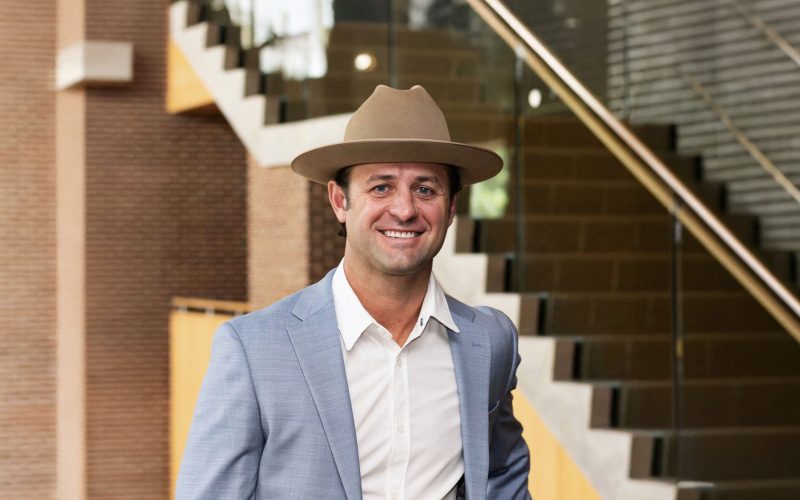
Ralph Dahm, a former digital currency startup founder turned fraud investigator, operates at the sharpest edge of this problem. His tool of choice is AI, and his argument for why it matters is straightforward: money moves the moment it is stolen, crosses borders instantly, and never stops moving across one or more blockchains. It is not unusual to discover the criminals move stolen digital currencies hundreds to thousands of time per day, called transactions or “hops”. Artificial Intelligence tools enable investigators to trace the movements almost in real time, with great efficiency.
What would take 40 to 50 hours of manual blockchain tracing, AI completes in minutes. That speed is the difference between stolen cryptocurrencies being recoverable or lost forever. During the ByBit hack, North Korean state actors stole $1.25 billion from the exchange and moved the funds 12,000 times per day to obscure the trail. Transactions ranged from a millionth of a penny to $2 million, deliberately designed to create noise that overwhelms manual investigation. AI tools can follow transactions through mixers like Tornado Cash, tracking where funds enter and exit, allowing investigators to stay current with criminal movement rather than perpetually chasing a trail that has already gone cold.
“As long as it’s on the blockchain, stolen digital currencies can be recovered,” Dahm says. He is currently working on cases dating back a decade, including the theft of Bitcoin in 2016. The blockchain’s permanence is the investigator’s advantage. Every transaction is recorded, providing an immutable audit trail. The challenge is processing the volume fast enough to make a difference, and that is precisely what AI solves. The moment stolen funds reach a liquidation point, the window to freeze assets opens. AI is what keeps that window visible.
How AI Converts Blockchain Data Into Court-Ready Evidence
Finding stolen funds is only half the problem. The other half is translating what the blockchain reveals into something a judge, district attorney, or law enforcement officer can act on with confidence. When stolen funds are located, AI confirms whether a clear transactional path exists from the victim’s wallet through every intermediary hop to the current location. It then converts highly technical blockchain data into a legally accessible language that someone who has never heard of Bitcoin can follow.
To ensure that evidence holds up under scrutiny, Dahm runs a parallel reconstruction: a second, entirely separate AI system independently verifies the findings, functioning as a peer-review equivalent. “If other investigators cannot obtain the same result, there’s a problem,” Dahm says. “If they do, then the legitimacy of the analysis is confirmed.” The evidence must be courtroom-ready from the moment it leaves his hands, because what happens next depends entirely on how fast law enforcement acts on it.
That is where the process most consistently breaks down. A three-week delay after Dahm delivers a draft subpoena almost guarantees the funds have moved again, requiring the entire tracing process to restart. The capability to locate stolen assets and prepare legally actionable evidence already exists. The governmental urgency to match it does not. “We’ve got the tools,” Dahm says. “Let us use them.”
Why Fraud Victims Face a Second Wave of Exploitation After the First
Once someone has been defrauded, their personal information is sold and shared across criminal networks, making them an immediate repeat target. Fraudulent recovery companies often advertise online, falsely claiming law enforcement affiliation and promising rapid recovery within 48 hours. They charge upfront retainers and then disappear. Such schemes continue to surface across major digital advertising channels, generating significant ad revenue.
Dahm’s process begins with a no-cost preliminary assessment. The victim provides the wallet address, Dahm traces the funds, and advises whether recovery is viable before any fee is discussed. If the money has already been converted to fiat currency and withdrawn from an exchange, he delivers that news at no charge. If funds remain on the blockchain, there is a case to pursue.
The scale of the criminal operations driving this fraud is difficult to fully comprehend. The individuals executing scams from Cambodian compounds were recruited with promises of legitimate employment, had their passports confiscated on arrival, and are forced to operate phones under coercive conditions. North Korean state-linked actors are widely reported to operate under government direction. Prosecution is extremely difficult.
“You’re not going to prosecute some kid held against his will in Cambodia,” Dahm says. “But you can try to stop the money flow and get it back to our victims.” That is what AI makes possible. Not only prosecution, but disruption. In a landscape where $150 billion disappears annually, and most of it goes unrecovered, disruption is valuable to reduce the fraud epidemic that continues to expand.
Follow Ralph Dahm on LinkedIn and visit Twin Oaks CRS for more information on crypto fraud investigation and digital currency recovery.