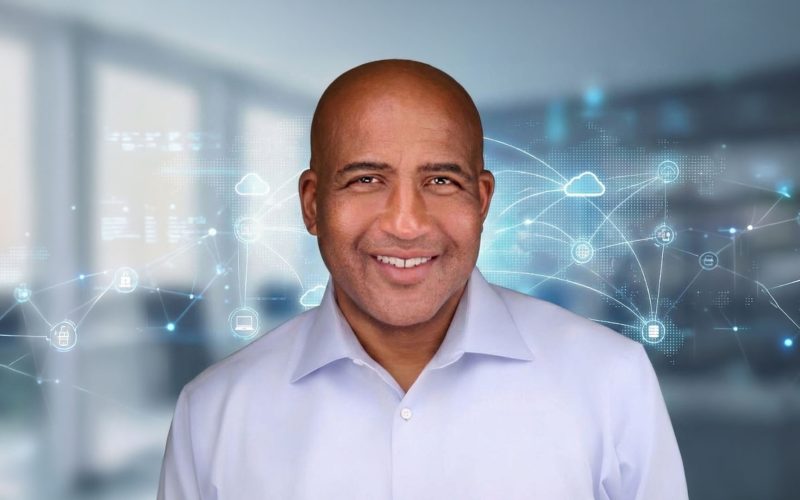




As revenue targets climb and impact expectations grow, teams are asked to do more with systems that were never designed to scale. AI can drive efficiently, but leaders must be willing to rebuild the human architecture that surrounds it all. “AI does not land in a vacuum,” says Andrea N. Grant, CEO and Principal Consultant, Grant Consulting Group. “It actually lands in culture, workflow, unspoken assumptions.” When organizations skip that reality and jump straight to platforms, they only amplify whatever dysfunction already exists. As a transformational COO, Grant has built her reputation on rapid diagnosis and measurable change. Her focus is to remove the bottlenecks that drain energy, unlock leadership capacity, and prove that serving people and driving profits can multiply each other rather than compete.
AI Is a Human Systems Challenge
Her perspective has been shaped as much by missteps as by wins. “Nothing sharpens you more than making mistakes,” she says candidly. Earlier in her career, she watched well-intentioned leaders roll out new technologies without first understanding who did what and why. “People are very protective of their work. They’re very proud of their work. They don’t want you messing with their stuff,” she says. When leaders fail to examine the human side first, AI becomes another burden layered on top of already stretched teams.
That is why Grant begins with a human workflow audit before the technology assessment. Where are people losing energy? Where is decision fatigue setting in? Where are handoffs breaking down? “We’re not asking what can AI do,” she says. “We’re asking where my people are exhausted?”
The Hidden Friction Points Leaders Miss
Even sophisticated organizations overlook two friction points, the competence cliff and the leadership translation gap. The competence cliff occurs when leaders roll out AI with minimal training and unchanged expectations, assuming quick mastery. Employees are suddenly doing two jobs: maintaining current performance while secretly trying to master new tools. “You think you’re giving them a gift,” she says. “But they’re trying to do their existing job and learn something entirely new, often without reduced expectations.” Without adjusting workloads, AI upskilling fast tracks teams to exhaustion.
The second friction point is the leadership translation gap, where middle managers, responsible for managing up and down, are left to interpret and operationalize the change. “They are frustrated. They’re confused. They’re anxious,” Grant says. Because those managers sit at the organizational hub, their uncertainty ripples outward. Burnout spreads not because of the technology itself, but because no one translated strategy into practical, supported execution.
A 90-Day Playbook for Sustainable Upskilling
Grant advocates for a focused 90-day roadmap that balances ambition with sustainability. The first 30 days center on the human workflow audit, a disciplined review of how work moves through the organization. Leaders identify broken processes, duplicative reporting, and unnecessary cognitive load. Days 31 through 60 introduce what Grant calls internal AI translators. “Every team needs at least one person who’s going to help lead this charge,” she says. These translators receive deeper investment and serve as bridges between strategy and frontline reality. By empowering insiders rather than relying solely on external consultants, organizations build confidence organically.
The final phase, days 61 through 90, focuses on redesigning for relief. “Instead of finding out what AI produces, let’s talk about what AI restores,” Grant says. That restoration might include bandwidth, sharper forecasting, or reduced administrative burden. When teams experience tangible relief, adoption accelerates without coercion. Condensing this work into 90 days creates momentum while leaving room to iterate. Rather than stretching initiatives over 12 months and losing focus, leaders build a foundation and refine from there.
From Role-Based Work to Outcome-Based Orchestration
Looking ahead, Grant sees a structural shift underway. “We’re moving from role-based work to outcome-based orchestration,” she says. Traditional job descriptions list tasks. Performance evaluations, however, measure outcomes. AI forces organizations to reconcile that disconnect. Grant envisions agile, cross-functional “mission pods” where human expertise and AI capacity are integrated around clear objectives. Managers evolve from task supervisors into what she calls capacity architects. Their job is no longer to monitor activity, but to design systems that align people, tools, and outcomes.
This transformation begins with mindset. Policies and job descriptions will follow, but leaders must first accept that AI can only be what they allow it to be. “AI is not going to take your job unless you don’t know how to use it,” she says. Fluency and literacy, not prompt writing alone, will define resilience. “AI can be for everybody, but we have to make it for everybody,” she says, emphasizing that populations historically sidelined from the workforce, including older adults and people with disabilities, can thrive when technology is intentionally deployed to support them. For organizations serious about scaling revenue and impact, that responsibility cannot be delegated. It requires disciplined operations, honest reflection, and a people first lens on every innovation decision.
Follow Andrea N. Grant on LinkedIn or visit her website for more insights.