



Operational clarity begins with understanding not just where an organization is going, but why. It requires leaders to ensure that intent is translated into meaning at every level of the organization. Without that shared understanding, even the most well-defined strategy risks becoming disconnected from execution.
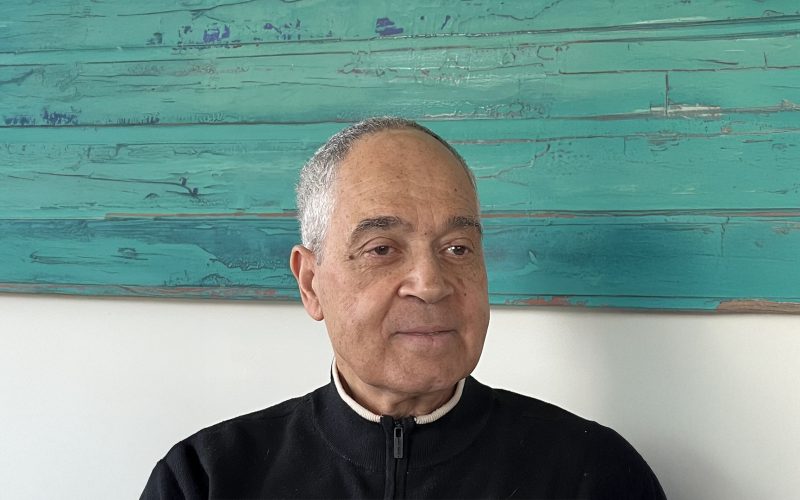
“You can’t have alignment without clarity,” says Noah Boudreaux, chief operating officer (COO) at MESH. “If people are marching toward a goal and they’re not sure why that creates challenges on the team.” In an environment where businesses are racing to implement new tools and strategies, Boudreaux reframes the conversation: operational clarity, grounded in line of sight, is what ultimately drives execution systems, employee alignment, and measurable outcomes.
Boudreaux has seen many leadership teams mistake well-communicated strategy for well-understood strategy. “I can explain it to you, but I can’t understand it for you,” he says, underscoring the limits of one-way communication. Leaders often hold deeper context, from market dynamics to strategic tradeoffs, that never fully translates to the broader organization.
Closing that gap depends on consistent reinforcement through day-to-day interactions. “The clarity comes from all the little conversations that go on after you initially state what we’re doing and why,” Boudreaux says. These moments, often overlooked, form the foundation of business clarity and organizational visibility. When employees can articulate both the destination and their role in reaching it, alignment becomes a natural byproduct.
Building Line of Sight Across the Organization
At the center of Boudreaux’s approach is operational line of sight for business leaders, a framework that connects individual contribution to enterprise outcomes. While the concept appears straightforward, its execution is often anything but. “Line of sight is how others have visibility into how the organization is performing, how their area is performing, and how they are performing,” he explains. Rather than relying on complex dashboards or dense reporting structures, leaders should start with the overarching strategy, then cascade performance through two or three layers, from company objectives to departmental goals to individual accountability.
This layered approach transforms abstract strategy into tangible action. It also reinforces employee alignment by making each person’s contribution visible within the broader system. “Show them how the company is performing and then show them at least two or three more layers, all the way down to where they’re connecting to it,” he says.
Aligning People, Process, and Technology
While strategic operations often emphasize process, Boudreaux places equal weight on people. Breakdowns in operational clarity are rarely confined to a single dimension. Instead, they emerge from the interplay between culture, systems, and execution. “Culture eats strategy for lunch,” he says, pointing to the behavioral foundation that underpins performance. Even the most refined execution systems will falter if employees lack engagement or belief in the direction.
Boudreaux’s approach reflects a people-first philosophy. “Good people can work with a bad process,” he says, while the inverse rarely holds true. By involving teams in designing and refining processes, organizations can build both ownership and momentum. This alignment of people, process, and technology becomes even more critical as AI enablement accelerates operational complexity. The role of COO leadership, in this context, is to integrate these elements into a cohesive system that supports both execution and adaptability.
Simplicity as a Strategic Discipline
“The more you can simplify things for your teams, the better,” he says. “I will take a 10-point objective and try to get it to three.” This discipline mirrors the design philosophy behind some of the most successful technology companies, where sophisticated systems are presented through intuitive interfaces. For Boudreaux, the same principle applies to strategic operations. Leaders must absorb complexity so their teams can focus on execution.
Simplicity also strengthens business clarity by reducing cognitive load. When employees can quickly understand priorities and expectations, they are more likely to act decisively and consistently. This is particularly relevant for early-stage companies and growth-minded organizations navigating rapid change, where clarity often determines whether momentum accelerates or stalls.
Clarity Drives Performance
The impact of operational clarity extends beyond efficiency. It shapes how employees engage with their work and how organizations achieve results. When individuals understand their role within the broader strategy, they are more likely to feel invested in the outcome.
“Nobody wants to feel like they’re just along for the ride,” Boudreaux says. “They want to be part of it.” This sense of ownership fuels both motivation and performance. It also creates resilience, enabling teams to navigate challenges without losing direction. As businesses continue to adopt new technologies and scale their operations, the ability to maintain this clarity will separate those that execute effectively from those that struggle to keep pace.
Boudreaux sees operational line of sight as a defining priority for the years ahead. By turning operational complexity into business clarity, organizations can align teams, accelerate execution, and build systems that support sustained growth.
Follow Noah Boudreaux on LinkedIn for more insights.