


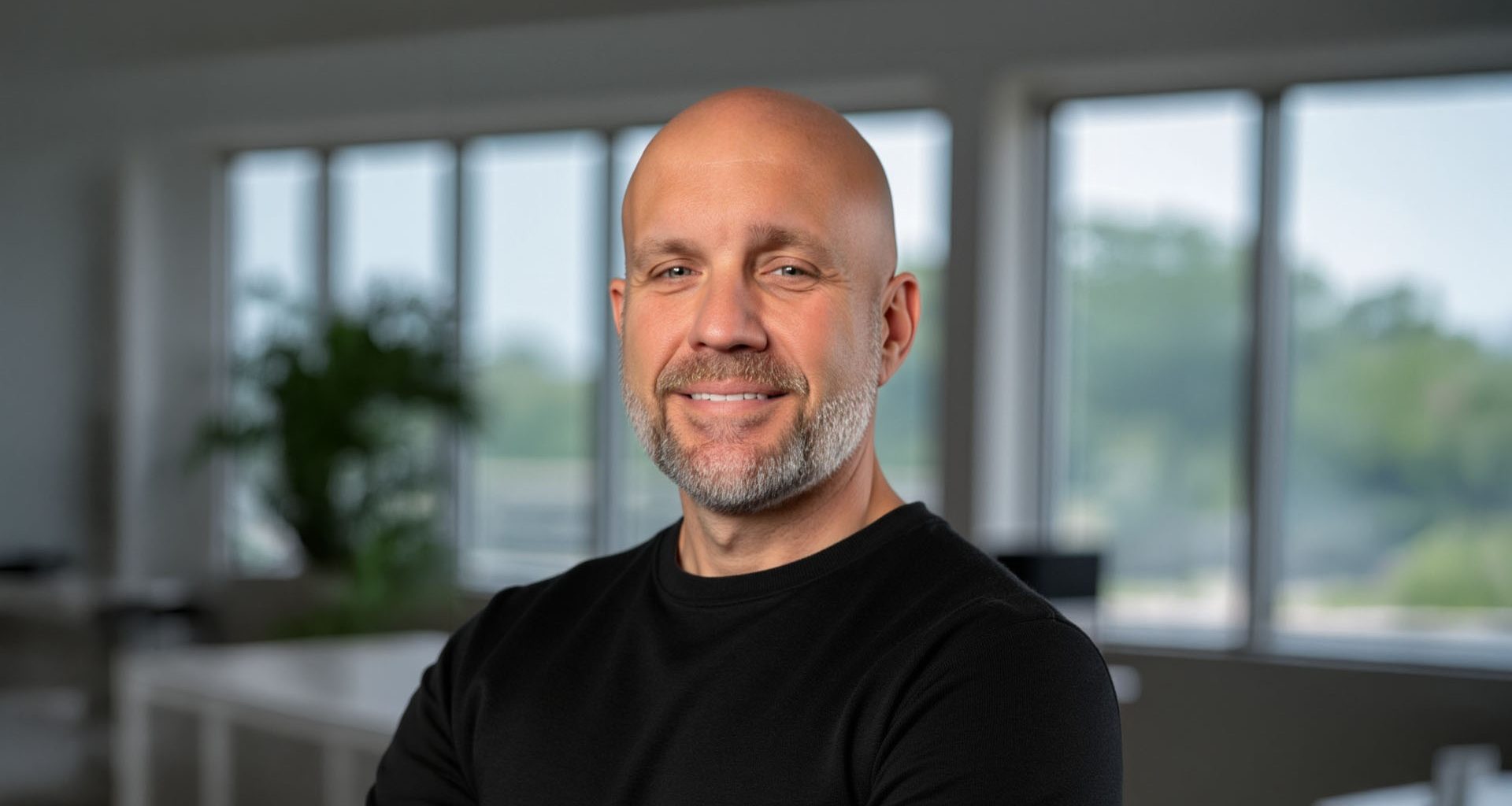
Warehouse on Wheels is one of North America’s fastest-growing trailer storage companies. From two locations and roughly 4,000 trailers to more than 37 locations and over 36,000 trailers across the United States, Canada, and Mexico, its success has come down to a leadership philosophy centered on operational clarity, an accountability culture, and execution discipline. “I believe business should be simple. Strip away the jargon and it comes down to this: solve real problems for real people, fast,” says Jonathan N. Brooks, Chief Executive Officer (CEO) of Warehouse on Wheels.
Brooks’ earlier corporate experience has shaped his leadership approach. He saw firsthand how organizations with enormous potential lost momentum, with some of the biggest drags on performance being unnecessary complexity, unclear leadership, and lack of accountability. “I saw how that large global organization struggled with clarity of communication,” Brooks says. “As I think back to that, I often think about the clarity of my communication. How am I articulating a situation or vision or key component of our strategy to our team members?”
Why Operational Clarity Creates High-Performance Companies
Brooks cites confusion as one of the biggest threats to watch out for when focusing on building a high-performing team. “It’s easy to mistake complexity, creating layers of unnecessary process, for sophistication.” At Warehouse on Wheels, teams understand the mission, know the expectations, and are empowered to act quickly when disruptions emerge. This is especially important in logistics and supply chain leadership, where conditions can change overnight. Tariffs, labor shortages, geopolitical instability, and shifting customer demand create an environment where hesitation can become costly.
“We’re just a tweet away from some other disruption in supply chain or the next geopolitical event,” Brooks says. “If we each take individual ownership and engage at a level where the buck stops with us, whatever those changes are, we’re embracing them and dealing with them right then and there.” The principle reflects Brooks’ broader belief in leading with what he calls “Extreme Ownership.” Problems are addressed directly instead of passed up the chain. In leadership, execution over excuses becomes the standard. “No matter the challenge we face, it all starts with self-reflection,” Brooks says. “Where have I failed to communicate? Where have I failed to provide commander’s intent?”
Building a Culture of Accountability That Scales
One of the greatest tests for any growing organization is preserving culture while expanding rapidly. Brooks believes many companies fail because they continually reinvent their identity instead of reinforcing a few consistent principles. Warehouse on Wheels intentionally built a culture around simplicity and repetition. “We’ve kept it simple,” Brooks says. “We anchor it on four basic core tenets and we just reiterate those. We don’t stray from those. We don’t come up with a flavor of the month.”
Those principles include safety first, employees matter, doing the right thing, and maintaining integrity in every interaction. Brooks views culture building not as an internal branding exercise, but as a system of consistent behaviors repeated over time. Building a culture of accountability, as described by Brooks, requires trust as much as discipline. Employees cannot take ownership if leadership constantly overrides decisions or creates fear around mistakes.
Human-First Systems and the Next Generation of Leaders
Rather than attempting to eliminate chaos, Brooks teaches teams how to remain steady inside it, including by investing heavily in leadership development. Warehouse on Wheels created an internal learning organization led by Dr. Mark Mann, who designs training programs tailored to employee strengths, weaknesses, and long-term ambitions. “If they revert back to those teachings and those core principles, it brings a certain calmness,” he says. “If everyone around you in that chaos subscribes to those principles, collectively you’re pretty strong and you’re going to get through that chaos.”
The objective is to create an environment where employees feel equipped to succeed professionally, whether their future remains at Warehouse on Wheels or elsewhere. Sustainable growth depends on people understanding both what is expected and why it matters.
Simplicity, Ownership, and Long-Term Resilience
For Brooks, the lesson from his early career still lingers decades later. His response has been to build systems that emphasize clarity over complexity and ownership over hierarchy. From chief financial officer (CFO) to operations leader, Brooks has carried the same belief that businesses perform best when people understand the mission, trust one another, and execute decisively.
That philosophy continues to shape Warehouse on Wheels as it grows across North America, proving that high-performance companies can be reliably built through disciplined execution, leadership accountability, and cultures where ownership is practiced daily.
Follow Jonathan N. Brooks on LinkedIn or visit his website for more insights.