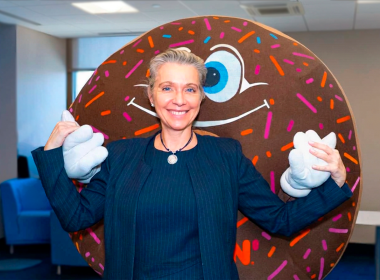

Most nonprofit and hospital boards still treat fundraising as a department. There is a development team, it has a target, and when the number comes up short, the conversation turns to whether the team is good enough. Bettina Alonso, Senior Vice President and Chief Development Officer at Maimonides Health, Brooklyn’s largest healthcare system, argues the structure itself is the problem. A single department, however talented, can only build so many relationships. Meanwhile, the physicians, nurses, and front-desk staff who have the deepest trust with the people an institution serves are sitting outside the conversation entirely, never told they have a role in it. That is not a staffing issue. It is a design flaw, and it caps what any institution can raise long before anyone picks up a phone.
Why Philanthropy Belongs In The Budget Meeting
The clearest tell of a broken model is when development hears about a strategic decision after it has been made. Bettina describes the familiar sequence: leadership sets priorities, approves programs, builds a budget, and then hands the result to fundraisers with instructions to go find the money. “That’s backwards,” she says. The fix is structural rather than cultural, and it is clear. Development professionals need a seat at the table during program planning, budget meetings, and strategic conversations, not only when fundraising appears on the agenda.
The reason this matters more than it sounds is that it changes what fundraisers can honestly say. A development officer who was in the room when a priority was set can explain the reasoning, the tradeoffs, and the intended outcome. One who was handed a target can only recite talking points, and donors can tell the difference. Bettina frames philanthropy itself as the concept most institutions misunderstand. “Philanthropy isn’t simply asking for money; it’s building relationships, earning trust, and connecting people to a mission they believe in.” You cannot delegate that to a department any more than you can delegate the institution’s reputation. It begins at the top, with leadership setting the example, and it has to reach every level of the organization before it means anything.
The Ego Problem Nobody Puts On The Risk Register
Ask most executives what derails a major campaign and they will point to the economy, a leadership transition, or a competing institution in the same market. Bettina’s answer is blunter and considerably harder to fix. “Egos. Without question, one of the biggest obstacles is when individual agendas become more important than the institution’s mission.” She has watched capable leaders grow so attached to their own priorities that they stop listening to colleagues, to donors, and sometimes to the communities they are meant to serve.
This is worth taking seriously because it is the failure mode nobody budgets against. Institutions model revenue risk and market risk. They do not model the senior leader who quietly steers a campaign toward the project that carries their name. Shared ownership demands humility, trust, and a willingness to put the mission ahead of personal recognition, which is precisely the behavior that organizational incentives tend to punish rather than reward. Bettina draws the line at the level of the question people are asking. “The most successful campaigns happen when people stop asking, ‘What’s in it for me?’ and start asking, ‘What can we accomplish together?'” Leaders who want that shift have to make it visible in their own conduct first, because staff read behavior far more accurately than they read strategy decks.
Why Internal Alignment Is What Keeps Donors From Taking Over
Donor expectations have moved. Collective giving and shared decision-making are increasingly the norm, and institutions that mistake engagement for interference end up in a slow fight over control. Bettina draws a distinction that most organizations blur: there is collaboration, and there is micromanagement, and the gap between them is filled by trust. Donors give to an institution because they believe in its mission and its leadership. When internal priorities are muddled, and teams are pulling in different directions, that trust thins, and donors respond by reaching for the steering wheel.
A strong culture of shared ownership is the defense. Clear priorities, aligned teams, and demonstrable results give donors the confidence to invest without needing to influence every decision. “Philanthropy works best when donors are partners in the mission, not managers of the institution,” Bettina says. The practical payoff shows up in reach. At Maimonides, a Grateful Patient Program brought physicians and clinical teams directly into the philanthropic conversation, which required significant time spent educating staff and building trust. The core lesson was that philanthropy is not about asking patients for money. It is about creating openings for grateful patients and families who already want to give back. Those are relationships a development team cannot build on its own, because it was never in the room where they formed. That is also the honest case for shared ownership over the traditional model. When fundraising sits entirely with one department, the number of people opening doors is fixed and small. When physicians, board members, leadership, and frontline staff understand their part, the capacity scales with the institution rather than with headcount. Bettina measures success accordingly. “The real measure of success isn’t just how much money we raise. It’s whether we’ve built something that will continue to grow long after we’re gone.” That is a standard most campaign dashboards are not built to track, and it is the one that separates a good year from a durable institution.
Follow Bettina Alonso on LinkedIn for more insights on philanthropy strategy, donor relationships, and building cultures of shared ownership.