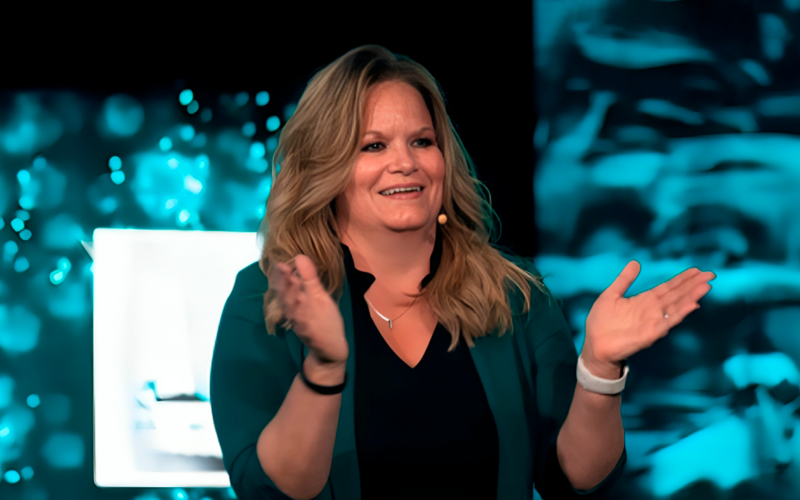




Divestitures are measured by financial outcomes, but the operational work that determines whether those outcomes endure begins well before a deal closes. For Lisa W. Brown, Enterprise Operations Leader, post-divestiture restructuring is about creating an organization that can perform with clarity through uncertainty.
Brown emphasizes that this work “definitely has to be before the deal closes.” The objective is to design the future-state organization early enough that employees can begin day one knowing how the business will operate, rather than spending critical time debating structure.
Designing the Organization Before Day One
Separation readiness starts with organizational design. A divestiture changes more than reporting lines. It can alter responsibilities, governance structures, service agreements, cost structures and the way decisions move across an enterprise. Brown’s approach is to establish the future state as early as possible, while respecting legal and organizational boundaries. That preparation allows leadership teams to enter the transition with greater role clarity and a defined operating model.
The distinction matters because “the organization still has to be able to function in the current state,” Brown says. That means leaders need a framework that supports today’s operations, while creating a controlled path toward tomorrow’s structure.
Decision Rights Create Role Clarity
Redrawing an organization chart does not automatically clarify who owns what. Effective post-divestiture restructuring requires decision frameworks that connect roles to outcomes and define how those roles interact. “You have to establish clear decision rights,” Brown says. Roles should be built around the outcomes they are expected to deliver, the decisions people can make, and how those decisions affect colleagues across functions.
That last point is particularly important. Accountability does not stop with the person making the final call. Brown emphasizes the need to examine “accountability transfers,” including what happens before and after a decision and how its consequences move through the organization.
The result is an enterprise solution rather than a collection of functional fixes. For supply chain leadership, that can mean aligning procurement, manufacturing, logistics, inventory, customer service, and transformation around a common set of responsibilities and governance structures.
Governance Has to Evolve With the Transformation
Not every decision can wait for the final organizational design. Brown describes the transition as similar to “wet cement,” where the structure is still taking shape but the business cannot pause while it hardens. Temporary decision rights can provide a bridge. Phase one responsibilities can eventually transition into phase two and phase three as the organization moves toward its final operating model. That approach creates continuity without pretending that every answer is already known. Communication and alignment become essential, particularly around who is responsible for what at each stage of the transition.
The same discipline applies to financial planning. Standard costs and service agreements can influence the value created by a separation, but those calculations need to be connected to the underlying transformation thesis. If savings depend on eliminating a portion of stock-keeping units, for example, leadership must understand what remains and how the resulting standard cost will be calculated. That creates a baseline for financial support and allows the organization to reverse-plan from its objectives.
Divestiture as a Transformation, Not a Transaction
For boards, the significance of a divestiture extends beyond the transaction itself. Brown argues that leaders should view the event as an opportunity to reposition the business for longer-term performance. “The board actually sees the change as a transformation and not just simply a transaction,” she says. That transformation can mean better accountability, improved customer service, stronger total delivered cost and greater protection against operational risk. Brown’s own career illustrates the scale of that mandate. She has led a $1.4 billion global supply chain serving more than 60 countries and has delivered results including a $900 million divestiture while maintaining more than 99% customer service, improving OTIF (on time in full) from 54% to more than 90%, and helping create more than $180 million in enterprise value.
The underlying lesson is that enterprise value depends on more than process improvement. It requires an operating model that aligns people, governance and execution around the needs of the customer. Transformation “is not just about headcount.” It is about positioning the enterprise to better serve the customer, because customer service ultimately sustains the revenue that keeps the business operating and growing.