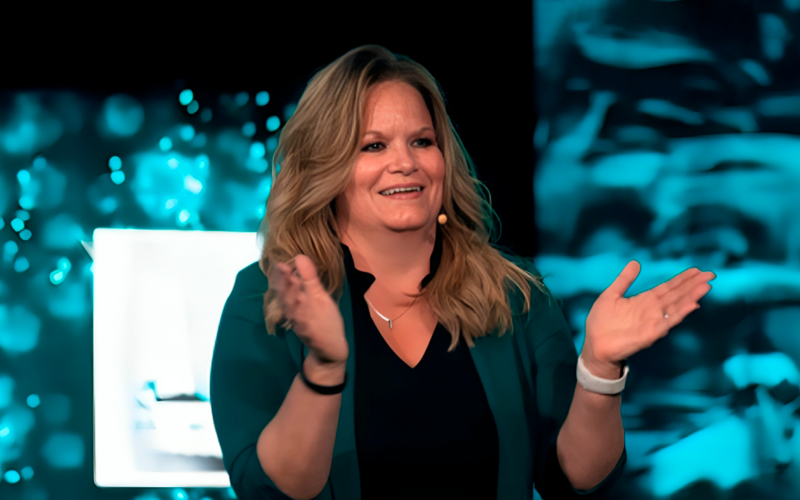




Stepping into an executive marketing seat across several organizations at once often sounds like an impossible balancing act. When companies bring in fractional talent to steer their commercial strategy, the pressure on that leader to fix day-to-day problems can quickly overtake the actual goal of setting long-term direction. For fractional chief marketing officer (CMO) Jessica Roubitchek, avoiding this operational trap requires drawing a clear line between high-level leadership and hands-on execution. Her approach relies on a defined operational structure, firm communication containers, and a practical view of where modern tools belong in the workflow.
Structuring the Three Layers of Leadership
To keep client demands manageable, Roubitchek breaks the CMO function down into three distinct operational layers:
- The top tier is executive leadership, which centers on establishing priorities and making high-stakes decisions for the business.
- Right below that sits management, where the focus shifts toward coordinating people, tracking vendors, and keeping ongoing initiatives moving on schedule.
- At the bottom layer are the concrete outputs, which she believes should always be handled by internal staff or specialized outside agencies.
Trying to manage all three tiers personally is where most marketing leaders run into severe fatigue. “My job is to make sure that we’re doing the right things, in the right order, and for the right reasons,” Roubitchek explains. “It became necessary to explain to people where my role started and ended so that I wasn’t the busiest, most overwhelmed person. At the beginning, I did have a tendency to jump into tactics, and you can’t do all of it well.”
Establishing Boundaries and Protecting Deep Work
Activity inside a marketing department rarely equates to meaningful commercial progress. In an early-stage company, especially, teams often confuse constant busyness with actual productivity, creating an environment where everything feels like an emergency. To counter that dynamic across multiple accounts, Roubitchek sets concrete communication expectations before signing client agreements. Rather than allowing an open-door phone policy, she defines the exact frequency and purpose of every client touchpoint.
“Anyone can be busy, but being effective means that you’re prioritizing exactly what you should be working on and making sure that the rest is outsourced or supported otherwise,” Roubitchek says. By scheduling deep-work blocks and reviewing client messages in bulk on platforms like Slack or Teams, she avoids the friction of reactive management. As she puts it, “We can’t let everything become the most urgent thing. I’ve set aside the container to work on your business, and I want to make sure that I’m being proactive and not reactive.”
Governing AI Without Surrendering Human Clarity
While automated software has accelerated many basic marketing tasks, relying on technology to set strategy creates real hazards for growth. Roubitchek integrates modern software into her workflows primarily to synthesize reporting data, spot performance patterns, and speed up routine communication. Yet she maintains that setting strategic direction requires contextual thinking that code cannot replicate. When businesses allow software to dictate their messaging without seasoned guidance, the result is often generic output that fails in the market.
“AI should never do the thinking. It should be governed. So, I use AI a lot as a time multiplier,” Roubitchek points out. Without human validation, tools can present outdated practices from previous years or invent claims entirely. To illustrate the problem, she compares automated tools to architectural plans without builders. “It’s like if you were a layperson handed a blueprint and someone said to build a house: your house isn’t going to come out very well. You need the contractor. You need the certified plumber. You can’t just have AI do it all for you.”
Over the next few years, the responsibilities resting on fractional leaders will likely broaden to include customer experience and technical systems oversight. Even with changing tools and shifting customer channels, the primary purpose of senior leadership will remain tied to business judgment rather than technical mechanics. Companies will continue to need experienced guides who can evaluate where capital should be deployed and which initiatives should be cut entirely. “The main role is going to be the same, and that is the judgment in deciding what the business should do, what it should stop doing, where it should invest, how the channels all fit together, and how the marketing connects to revenue,” Roubitchek notes. For growing companies navigating uncertain markets, success rarely comes from launching every possible campaign at once. Long-term commercial traction depends on sequencing the right initiatives and connecting marketing investments directly to the bottom line.
Follow Jessica Roubitchek on LinkedIn for more insights on fractional CMO strategies, executive leadership, and scaling marketing operations.