



Under Europe’s Digital Operational Resilience Act, a bank now has roughly 72 hours to report a major incident. That single regulatory clock has quietly rewritten the economics of how financial institutions operate. You cannot reconstruct the truth of what happened inside your operation that fast if your operating model was built to obscure it. Transparency has stopped being a virtue that leaders aspire to and become infrastructure they are legally required to demonstrate.
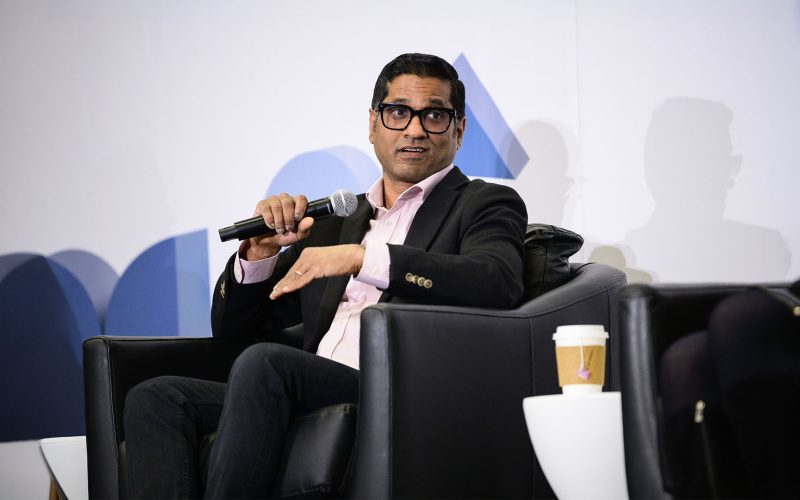
That shift is not lost on David Fapohunda, a transformation leader with deep experience inside regulated financial institutions. His argument is that most organizations still treat transparency as a reporting exercise, something produced after the fact for regulators and boards, when it should be understood as the operating system that makes speed possible in the first place. “The idea is that you go slow there to focus upfront on that one thing, which enables you to go fast everywhere else,” he explains. The claim is deliberately counterintuitive, and it runs against how most institutions actually behave.
Transparency Creates the Conditions for Speed
The regulatory pressure is real and measurable. Nearly 40% of financial institutions now demand real-time monitoring of their operations, and real-time risk analytics have become the single largest growth driver in risk technology spend. The reason is straightforward. Meeting DORA-era resilience expectations requires complete visibility into how platforms are performing, where risk is concentrating, and what customers are experiencing, all in the moment rather than in a retrospective report.
Fapohunda’s position is that this visibility is not a compliance cost but a speed enabler. When teams can see how applications are performing in real time, they identify emerging risks before they escalate and respond with precision when incidents occur. “Having transparency becomes virtually critical within your infrastructure so that you can understand when there are real-time issues demanding attention,” he notes. The organizations that internalize this stop treating visibility as overhead and start treating it as the thing that lets them move without breaking.
Decision-Making Belongs Closest to the Facts
Speed at scale depends on where decisions are made. McKinsey’s research is unambiguous on this point. Agile organizations function as networks of teams running rapid decision cycles, and fast decision-makers are nearly twice as likely to also make high-quality decisions. The instinct that speed and quality trade off against each other is, empirically, wrong.
“The most fundamental piece is really in agile: empowering decision-making to the people closest to the facts,” Fapohunda says. The clearest proof point is ING, which reorganized into roughly 350 squads, compressed its release cycles from a few times a year to every two to three weeks, and moved its platform Net Promoter Score from minus-30 to plus-30. That is not a dashboard achievement. It is what distributed authority paired with shared instrumentation produces. Everyone acts locally, everyone can see globally.
Empowerment, however, is not the absence of oversight. It requires clearly defined decision rights, accountability, and visibility so that autonomy operates inside well-understood boundaries. Transparency is the mechanism that keeps distributed decision-making aligned with enterprise objectives rather than fragmenting into chaos.
Strong Foundations Prevent Agile Failures
This is where most transformations come apart. Somewhere between 47% and 70% of agile transformations miss their stated objectives, and roughly 74% of those failures trace back to weak organizational support rather than incapable teams. The failure is structural, not human.
Fapohunda calls the most common version of it “agile theater,” stand-ups and sprints layered on top of an organization where nobody’s actual ownership of outcomes has changed. The data exposes the gap precisely. Executives rate their big-bet decisions as high quality 65% of the time, but their delegated decisions only 46% of the time. “You delegated the work but never instrumented the decision,” is how he frames it. Planning ceremonies, ownership structures, and clearly assigned decision rights are not bureaucracy. They are the framework that eliminates the uncertainty that would otherwise slow everything down. Agility without clear ownership is not speed. It is motion without accountability.
Trust Grows Through Honest Visibility
The hardest part of transparency is cultural, because transparent execution inevitably exposes gaps. Fapohunda’s reframe is that this exposure is the system working, not failing. “Exposing operational gaps and failures is a good thing. It’s about how you respond to those gaps and failures that agile enables you to succeed in,” he says.
The research backs him. Amy Edmondson’s work at Harvard found that high-performing teams do not make fewer mistakes. They report more of them. Google’s Project Aristotle reached the same conclusion from an entirely different direction, identifying psychological safety as the single biggest differentiator of its best-performing teams. Trust erodes when people sense a leader is hiding the gap, not when the gap is named.
That culture is set at the top. “I personally have always taken the opportunity to identify where I have had misses of my own,” Fapohunda says. “Being that authentic leader who can humanize my failures then creates that safe space for others.” Radical transparency, in his account, is a behavior a leader models rather than a policy they mandate. Transparency without safety simply teaches people to hide better.
The Real Test Is Coming
The institutions treating transparency as a compliance obligation are solving for the regulator. The ones treating it as an operating system are solving for speed, resilience, and trust simultaneously, and only one in five organizations currently qualifies as a genuine decision-making winner, fast and high-quality at once. As DORA enforcement matures and agentic AI pushes more decisions to the edge of the organization, that gap will widen. The question every leader should be asking is not whether their operation can produce a report when the regulator calls. It is whether their people surface the weak signal on day one, or bury it until it becomes the incident that starts the 72-hour clock.
Follow David Fapohunda on LinkedIn or visit his website for more insights on agile leadership and operational excellence.