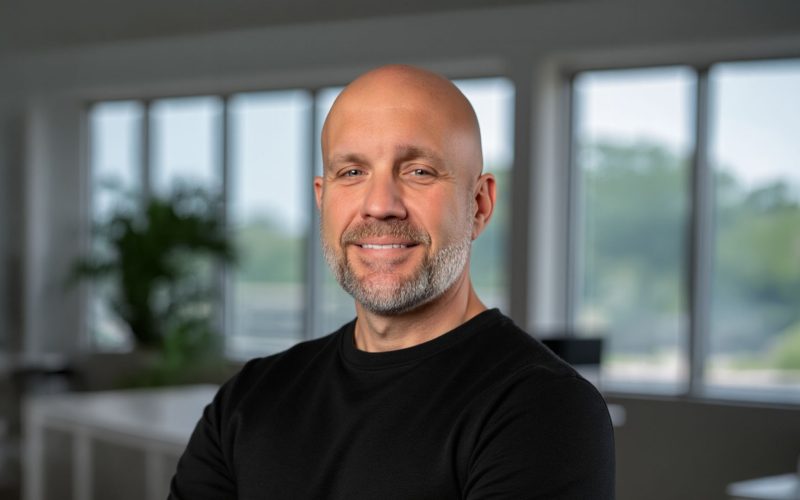




The degree on a resume tells an employer what someone studied. It says almost nothing about what they can do. That gap has always existed, but as microcredentials multiply and the labor market shifts toward skills-based hiring, the cost of that gap is becoming impossible to ignore. Employers receive more credentials than ever, without a shared way to read what they represent. Learners are completing programs whose credentials do not travel, and the two systems meant to connect them still are not connected. Başak Büyükçelen, who leads Pressbooks, works at the center of that disconnect. “The learning lives in one system, and the employer’s needs live in another,” Büyükçelen observes. “There needs to be a connection between those two so that when people are looking for certain skills to hire, they’re able to really understand the candidate in front of them.”
What Makes a Microcredential Credible
For many microcredentials, the teaching is strong. What’s missing is a credential that communicates what the learner can actually do. Instructors design learning from a teaching perspective, but the skills and outcomes that result rarely translate to employers or learners in a demonstrable way. The credential ends up functioning as a sticker, proof that something was completed, with no reliable signal about what was actually gained. Büyükçelen identifies three things that separate a genuinely valuable credential from one that simply checks a box:
- The learning must be mapped to real skills and competencies, not just topics covered, but what the learner can actually do with the information.
- Authentic assessment has to sit behind the credential, allowing learners to demonstrate skills rather than recall memorized content.
- The metadata attached to the credential must be portable and machine-readable, remaining valid and meaningful decades later, even if the issuing organization no longer exists.
“If you have a certificate from a company that no longer exists twenty years later,” Büyükçelen notes, “you do not want that to disappear. It is important that today’s data is still readable and meaningful far into the future.” Building a system that actually serves learners and employers requires keeping those two groups in genuine dialogue. The question is not what features can be added to sell a platform. It is how the platform enables an employer to trust that a candidate has genuinely demonstrated the claimed skill.
Opening the Door for Learners Who Cannot Afford to Wait
Modular learning lowers the cost of entry in ways that traditional degree programs cannot. Even in countries where education is free, barriers remain. Learners who need to work, care for family members, or manage financial constraints cannot commit to a fixed multi-year program. Microcredentials allow them to start, pause, stack, and combine credentials without a predetermined timeline, building toward qualifications incrementally rather than all at once.
Prior learning recognition extends that accessibility further. An accountant who has spent five years handling payroll can have that documented experience credited toward an HR qualification rather than starting from scratch. The remaining coursework drops dramatically. The cost drops with it. “You stack all of them up: microcredentials, prior learning records, other forms of learning, and all of a sudden you have very little to do to get to that degree that would have otherwise taken four years,” Büyükçelen reflects.
The Infrastructure Has to Outlast the Label
The term “microcredential” may not survive the next five years. Labels evolve, terminology shifts, and what gets called a microcredential today may be described entirely differently by the same people within a few years. What has to last is the infrastructure beneath the label, a layer that enables content and metadata to travel across institutions and employers, regardless of how a credential is formatted or what it is called.
Employers are already beginning to hire against skills profiles rather than degrees. The more significant development is the growing number of institutions working directly with industry partners to co-design credentials. When an employer helps shape the competencies being taught, the resulting credential carries far more weight than one built without that input. That bidirectional communication is precisely what is missing and precisely what Büyükçelen is focused on building toward.
Follow Başak Büyükçelen on LinkedIn for more insights into microcredentials, open education, and building the credential infrastructure that actually serves learners and employers.